

Conducting a security audit is crucial for property owners who want to ensure comprehensive protection against potential risks. This process involves a systematic evaluation of potential vulnerabilities and weaknesses within and around your property, from the perimeter to entry points and beyond. In this guide, we provide a step-by-step approach to performing a security audit, focusing on practical methods to bolster your defences and the effective use of security cameras in Perth to achieve maximum security.
Step 1: Outline Your Security Goals and Risk Areas
The first step in conducting a successful security audit is to outline your security goals clearly. Ask yourself key questions, such as:
- Which areas of the property require the highest levels of protection?
- Are you looking to deter potential intruders, protect assets, or monitor specific zones?
Understanding your primary objectives will help you focus your audit efforts on areas that align with your goals. For instance, commercial properties may prioritise safeguarding expensive equipment, while residential properties may focus on securing entry points and vulnerable areas like backyards or detached garages.
When establishing your security goals, include risk areas like high-value asset locations or isolated sections of the property. Consider factors like lighting conditions, line of sight, and ease of access when evaluating the need for additional security cameras in Perth, where terrain and property layout may influence the visibility and range of cameras. This preliminary step sets the foundation for an organised, goal-oriented audit process.
Step 2: Conduct a Comprehensive Perimeter Inspection
Once your security objectives are in place, perform a detailed inspection of the property’s perimeter, which includes all external boundaries, fences, walls, and gates. An effective perimeter inspection identifies potential access points, such as low or damaged sections of fencing that could allow easy entry. Additionally, evaluate the robustness of any gates or barriers for structural weaknesses.
In many cases, enhancing perimeter security involves:
- Repairing damaged fencing or installing additional barriers to strengthen vulnerable spots.
- Installing surveillance systems along the boundary for constant monitoring.
- Using motion-activated lights or alarm systems in conjunction with security cameras.
Perth properties often have unique perimeter layouts, whether due to terrain, fencing styles, or proximity to other structures. Placing security cameras along these boundaries enables property owners to detect intruders before they enter, deterring crime and giving immediate visual access to any suspicious activity.
Step 3: Evaluate Entry Points for Secure Access
Doors, windows, and any secondary access points (such as garage doors or cellar entrances) are high-priority areas in any security audit. Examine each entry point to assess the quality of locks, durability of frames, and security of glass panes. Some practical steps for entry-point evaluation include:
- Testing the sturdiness of locks and upgrading to deadbolts or smart locks where necessary.
- Reinforcing frames, especially around glass doors and windows.
- Installing security bars or grilles on windows, if permitted or needed for added security.
In addition, placing security cameras near all main and secondary entry points is recommended. Surveillance around entrances provides instant visibility of who enters and exits the property. Many security cameras in Perth are equipped with features like motion detection, high-resolution video, and remote monitoring, enabling you to view live footage from mobile devices. This is particularly useful for larger properties or buildings with multiple entry points, allowing quick response in case of a security breach.
Step 4: Assess Outdoor Lighting and Shadowed Areas
Adequate lighting is essential for deterring potential intruders, as dark, shadowed areas can be exploited. Walk through your property at night to identify zones that may need extra lighting. Key locations include pathways, driveways, outdoor storage areas, and any unlit corners around the property’s perimeter.
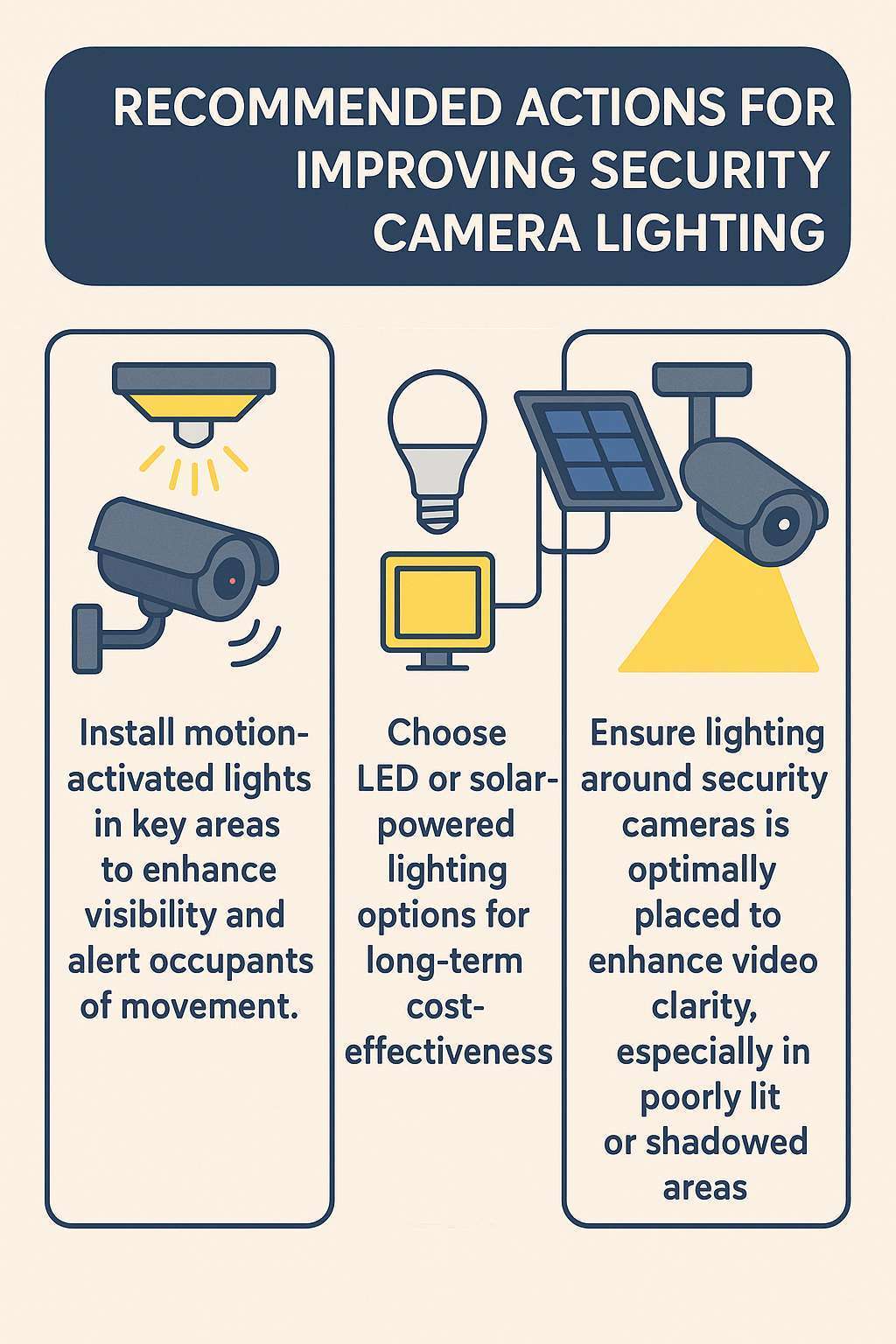
Recommended actions for improving lighting include:
- Installing motion-activated lights in key areas to enhance visibility and alert occupants of movement.
- Choosing LED or solar-powered lighting options for long-term cost-effectiveness.
- Ensuring lighting around security cameras is optimally placed to enhance video clarity, especially in poorly lit or shadowed areas.
Many security cameras now feature night vision and low-light performance, but supplementary lighting remains beneficial for improved visibility. In Perth, properties with well-lit exteriors, combined with quality security cameras, are less attractive targets for intruders, as these measures significantly reduce the likelihood of unauthorised entry.
Step 5: Examine Surveillance Systems and Equipment Quality
Evaluate your existing surveillance system, ensuring it meets modern security standards and provides comprehensive coverage of your property. When assessing surveillance quality, consider:
- Camera placement and angles to avoid blind spots.
- Features such as wide-angle views, high-definition (HD) resolution, and remote monitoring capabilities.
- Additional functions like motion detection, night vision, and recording capabilities.
For most properties, a mix of fixed and rotating security cameras is ideal, enabling flexibility in coverage. In Perth, upgrading outdated systems with newer models provides enhanced video clarity and can include cloud storage options for secure footage backup. Modern security cameras often allow for live streaming directly to a mobile device, making it convenient to monitor the property remotely.
Step 6: Review Internal Security for Added Protection
External security measures are crucial, but internal security is equally important. Evaluate key areas within the property, such as offices, bedrooms, or storage rooms, where valuables are kept. Recommended internal security practices include:
- Implementing access control systems that restrict entry to sensitive areas.
- Using strong safes or lockable storage for valuable items.
- Setting up security cameras in hallways or near high-value assets to monitor movement and activity.
In Perth, where business or residential properties may contain sensitive data or valuable items, combining access control with surveillance ensures that every layer of security is covered. Regularly check internal locks and surveillance equipment to maintain effective internal protection.
Step 7: Identify High-Risk Areas and Establish a Security Upgrade Plan
After completing the inspection, categorise any high-risk areas identified during the audit. Develop an action plan to address these vulnerabilities promptly. This may involve:
- Budgeting for new security cameras or updating existing systems.
- Scheduling maintenance or repairs for damaged locks, fences, or lighting fixtures.
- Setting up a schedule for periodic audits to keep security measures up-to-date.
Establishing a timeline for security upgrades is critical for maintaining a safe environment. In Perth, where security needs can evolve over time, staying proactive with security measures ensures you’re prepared for any potential threats.
Step 8: Monitor Security Cameras and Perform Routine Audits
A one-time audit provides a baseline for security, but routine monitoring and regular follow-up audits are equally essential. Over time, landscaping changes, property expansions, or weather conditions may impact your security measures. Regularly monitor security cameras and test systems to ensure they continue to function optimally.
Conduct periodic security audits, ideally twice a year, or more frequently if your property experiences high visitor traffic or changing conditions. Routine audits help detect any new vulnerabilities, allowing you to adjust security measures as needed to maintain robust property protection.
Conclusion
A comprehensive security audit is a proactive measure to identify and mitigate potential vulnerabilities on your property. By following these steps, you can safeguard against intrusions and establish a strong security framework. High-quality Perth security cameras play a vital role in this setup, enabling continuous monitoring and acting as an effective deterrent against unauthorised access.