
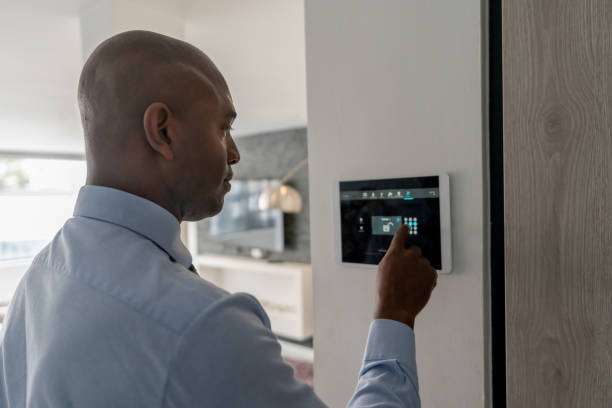
Solar-powered alarm systems operate independently from the electrical grid, using photovoltaic panels to generate energy stored in integrated battery units. These systems are designed to maintain continuous operation, even during outages, making them particularly relevant in environments where grid reliability is inconsistent or unavailable.
Unlike traditional wired setups, solar-powered solutions reduce reliance on infrastructure, enabling deployment in remote, rural, or newly developed locations. For property owners evaluating Burglar Alarms Perth, solar configurations present a distinct alternative aligned with energy independence and operational resilience.
Reliability in Real-World Conditions
Reliability is a primary consideration when assessing solar-powered alarms. Modern systems incorporate high-capacity lithium batteries that provide extended backup during low sunlight periods. In Perth’s climate, characterised by high annual sunshine hours, solar charging is generally sufficient to sustain consistent performance.
Advanced systems also include:
- Low-power consumption sensors
- Intelligent sleep modes to conserve energy
- Battery monitoring alerts for maintenance planning
However, reliability is influenced by installation quality, panel positioning, and battery capacity. Shaded environments or poor orientation can reduce efficiency, requiring careful system design.
Power Efficiency & System Performance
Solar-powered alarms are engineered to operate with minimal energy consumption. Components such as motion detectors, wireless cameras, and control panels are optimised to function within constrained power budgets.
Key performance considerations include:
- Energy storage capacity: Determines how long the system operates without sunlight
- Load management: Balances energy usage across connected devices
- Transmission efficiency: Wireless communication protocols designed for low power draw
For properties seeking security systems Perth solutions that reduce electricity dependency, solar-powered units offer a measurable advantage in long-term operational efficiency.
Use Cases for Remote & Off-Grid Sites
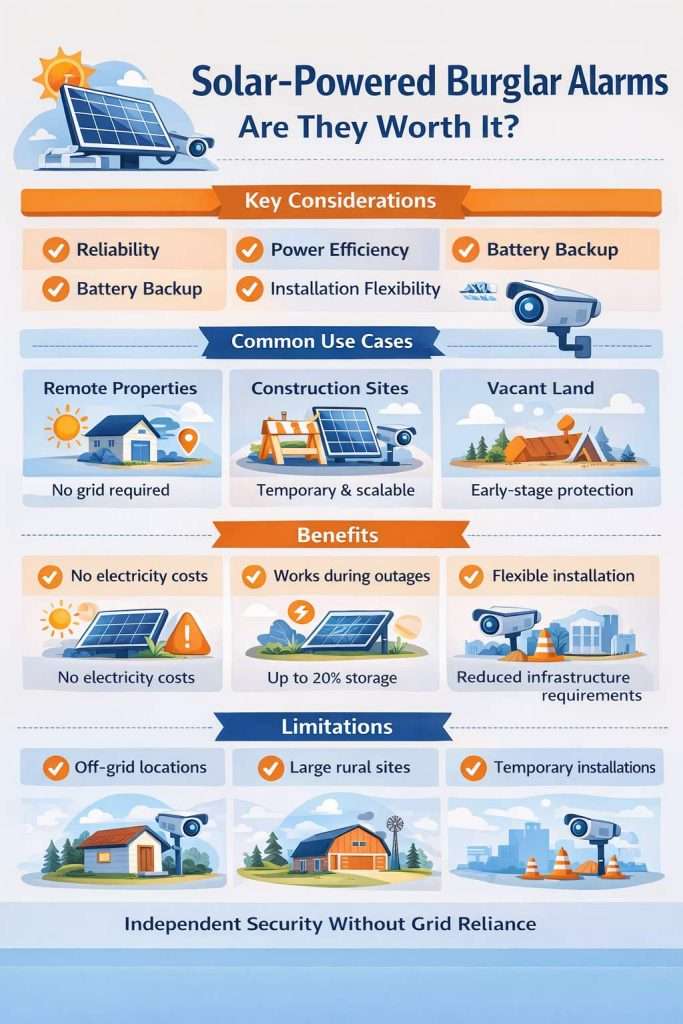
Solar-powered alarm systems are particularly suited to locations where conventional power access is limited or impractical. Common applications include:
- Rural properties & farms: Large land areas requiring perimeter monitoring without extensive cabling
- Construction sites: Temporary security setups where grid access is unavailable
- Vacant land or developments: Early-stage security before infrastructure is established
- Telecommunications & utility sites: Remote assets requiring continuous monitoring
In these scenarios, solar systems eliminate the need for trenching, wiring, or ongoing power costs, simplifying deployment while maintaining coverage.
Cost Considerations & Long-Term Value
Initial setup costs for solar-powered systems can be higher due to panels, batteries, and specialised components. However, this investment is offset by reduced operational costs, particularly where grid connection would require significant infrastructure work.
Financial considerations include:
- No ongoing electricity costs
- Reduced installation labour in remote areas
- Lower maintenance requirements with modern battery technology
When compared to traditional Burglar Alarms Perth, solar-powered systems may deliver stronger value over time, especially in off-grid environments.
Limitations & Practical Constraints
While solar-powered alarms offer clear advantages, they are not universally suitable. Limitations include:
- Reduced efficiency in heavily shaded or indoor environments
- Dependence on battery health for uninterrupted operation
- Potential performance variation during extended periods of low sunlight
For urban properties with stable power supply, conventional security systems Perth installations may provide a more straightforward solution with fewer variables to manage.
Conclusion
Solar-powered burglar alarms provide a viable, energy-independent solution for securing properties where traditional power access is limited or costly. Their reliability in Perth’s climate, combined with efficient energy management and flexible deployment, makes them particularly suited to rural, remote, and temporary sites.
For property owners assessing security options, the decision ultimately depends on location, infrastructure availability, and long-term operational priorities. Solar-powered systems offer a practical alternative where independence, scalability, and reduced running costs are key considerations.