
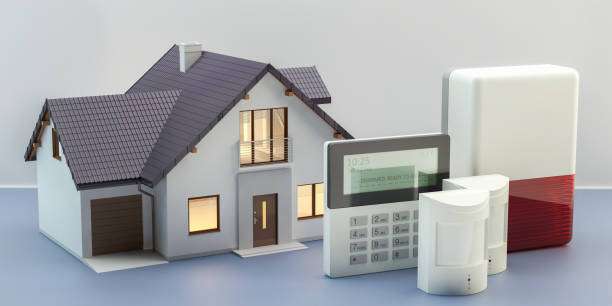
Effective alarm performance is not determined by sensors alone. The way a system is structured through zoning directly influences how quickly a threat is detected, how accurately it is verified, and how efficiently a response is triggered. For property owners assessing Burglar Alarms, zoning strategies should be viewed as a core design component rather than an optional configuration.
Modern security systems in Perth rely on layered detection. By separating sensors into defined zones and assigning specific behaviours to each, the system can distinguish between normal activity, potential intrusion, and confirmed threats. This reduces false alarms while improving response accuracy.
What is alarm zoning and why it matters
Zoning refers to dividing a property into separate detection areas, each linked to specific sensors and programmed responses. Instead of treating the entire site as one detection field, zoning allows the system to identify where an event occurs and how it should be handled.
A well-zoned system provides:
- faster identification of intrusion points
- improved verification before triggering alerts
- more precise notifications for monitoring centres
- reduced unnecessary callouts
For both residential and commercial properties, zoning ensures the alarm system responds proportionally to the type and location of activity.
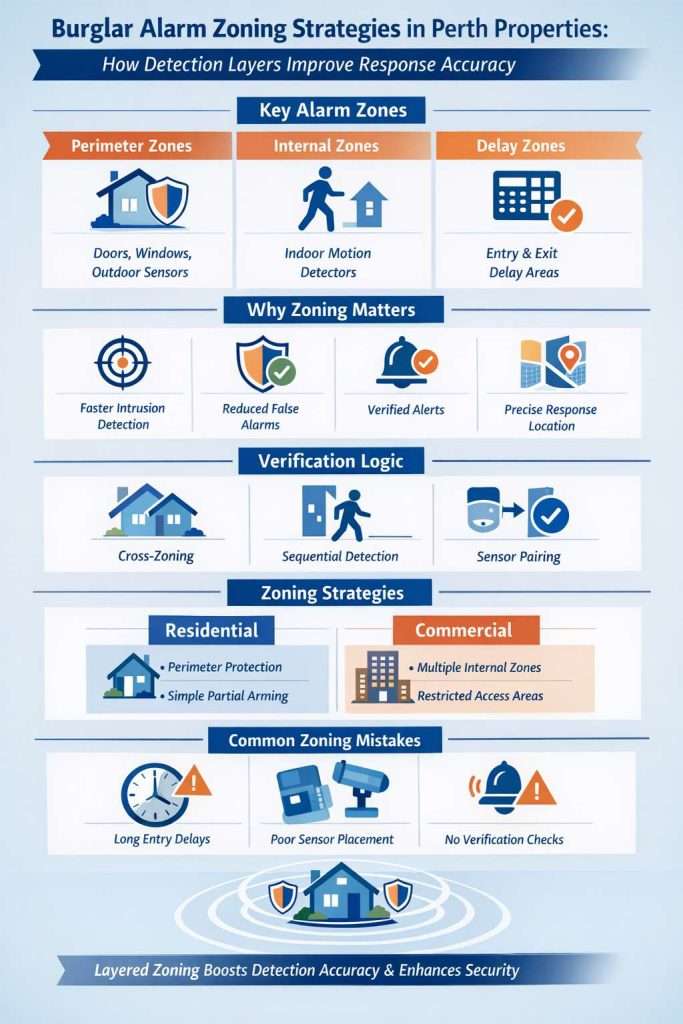
Perimeter zones: the first layer of defence
Perimeter zones are designed to detect intrusion attempts before an offender enters the main structure. These zones typically include:
- door contacts
- window sensors
- glass break detectors
- external motion sensors in selected applications
The primary function of perimeter zoning is early detection. When configured correctly, it allows the system to trigger alerts at the point of entry rather than after movement inside the property.
For Perth properties, perimeter zones are particularly important due to common access points such as sliding doors, garage entries, and rear access areas. Environmental considerations like heat and airflow must also be factored into sensor selection and placement to maintain reliability.
In many Burglar Alarms Perth installations, perimeter zones are programmed for instant alerts, ensuring there is no delay once a breach is detected.
Internal zones: confirming movement within the property
Internal zones provide the second layer of detection. These are typically made up of:
- passive infrared (PIR) motion detectors
- dual-technology sensors
- hallway or room-based motion coverage
The purpose of internal zoning is verification. If a perimeter breach is followed by internal movement, the system can classify the event as a higher-confidence intrusion.
Internal zones are also useful in properties where perimeter coverage is limited or where occupants may arm only part of the system. In these cases, internal sensors act as the primary detection method.
When integrated properly within security Systems Perth, internal zones help reduce false alarms by requiring multiple triggers before escalating a response.
Delay zones: controlled entry without unnecessary alarms
Delay zones are designed for authorised entry points such as front doors or designated access areas. These zones introduce a short delay between activation and alarm triggering, allowing authorised users time to disarm the system.
Key characteristics of delay zones include:
- programmable entry and exit times
- audible warnings during countdown
- integration with keypads or access control
Without delay zones, normal use of the system would result in frequent false alarms. However, poor configuration can create vulnerabilities. Entry delays should be kept as short as practical and limited to specific access points.
For Perth homes and businesses, delay zones are commonly applied to main entry doors while all other perimeter zones remain instant-trigger areas.
Verification logic: improving response accuracy
Verification logic is what transforms a basic alarm system into a reliable security solution. Instead of responding to a single trigger, the system uses programmed rules to confirm whether an event is genuine.
Common verification methods include:
- cross-zoning (two separate zones triggered within a defined timeframe)
- sequential detection (perimeter breach followed by internal movement)
- sensor pairing (requiring dual-technology confirmation)
This approach significantly reduces false alarms caused by environmental factors, pets, or user error. It also provides monitoring centres with more reliable data, allowing for faster and more confident response decisions.
In advanced Burglar Alarms Perth configurations, verification logic is often tailored to the property layout, occupancy patterns, and risk profile.
Layered zoning for residential vs commercial properties
Zoning strategies vary depending on the type of property:
Residential properties
- focus on perimeter protection and internal backup
- simplified zoning for ease of use
- partial arming options for night-time security
Commercial properties
- multiple internal zones across departments or areas
- restricted access zones with higher sensitivity
- integration with access control and monitoring systems
For larger sites, zoning can also support operational needs, such as isolating specific areas after hours while allowing limited access elsewhere.
Well-designed security Systems Perth ensure that zoning aligns with both security requirements and day-to-day usability.
Common zoning mistakes to avoid
Incorrect zoning can reduce system effectiveness or increase false alarms. Common issues include:
- over-reliance on internal sensors without perimeter coverage
- excessive entry delays creating security gaps
- poorly positioned sensors leading to missed detection
- lack of verification logic resulting in unnecessary alerts
Addressing these issues during system design is far more effective than attempting to correct them after installation.
Conclusion
Zoning is a critical factor in how effectively an alarm system performs. By structuring detection into perimeter, internal, and delay zones, and applying verification logic, property owners can achieve faster detection, improved accuracy, and more reliable response outcomes.
For Perth properties, where layouts, environmental conditions, and usage patterns vary, a tailored zoning strategy ensures that alarm systems operate as intended. When properly configured, Burglar Alarms Perth solutions provide layered protection that supports both security and usability, while advanced security Systems Perth deliver the precision required for consistent, dependable performance.