

Across Australia, the telecommunications landscape has undergone a major transformation as the National Broadband Network (NBN) replaces the legacy copper Public Switched Telephone Network (PSTN). For many households, this transition has been relatively straightforward for internet and phone services. However, for properties that rely on monitored alarm systems, the shift has important technical implications.
Traditional alarm communication methods were designed to operate over analogue landline networks. As the PSTN network is progressively disconnected, many homes must adapt their alarm communication pathways to maintain reliable monitoring and emergency response capabilities. Understanding how this transition affects residential alarm infrastructure is essential for maintaining effective property protection.
Understanding the PSTN Shutdown
The PSTN network was historically used for voice calls and alarm dialler communications. Many monitored alarms relied on this infrastructure to send signals directly to monitoring centres during intrusion, tampering, or system faults.
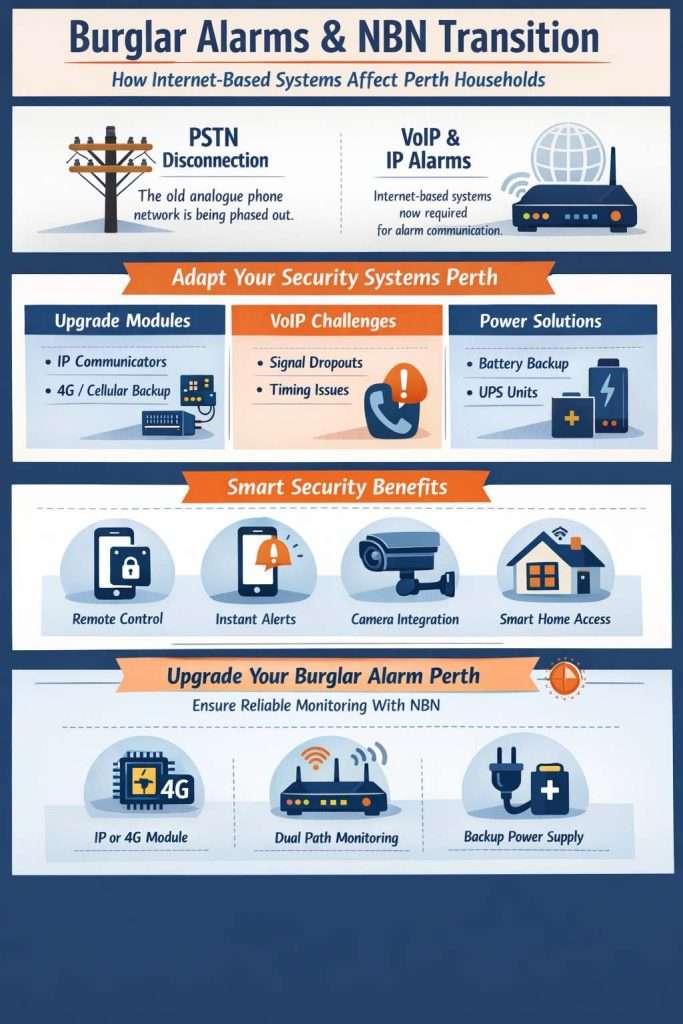
With the rollout of the NBN, PSTN services are being phased out nationwide. This means analogue phone lines that once supported alarm diallers will no longer function as a primary communication pathway.
For households that still rely on legacy dial-up alarm signalling, the disconnection can lead to communication failures unless upgrades are implemented. As a result, many property owners installing or upgrading a Burglar Alarm Perth system must ensure that the equipment supports modern digital communication protocols.
Why Internet-Based Communication Matters
Modern alarm systems increasingly rely on internet-based communication to transmit alerts. Rather than using analogue diallers, these systems connect through IP networks using broadband connections.
Internet-enabled alarm panels can send signals to monitoring centres through encrypted digital protocols, often providing faster and more reliable communication than traditional phone lines.
Advantages of IP-based alarm signalling include:
• Faster signal transmission
• Improved encryption and security protocols
• Remote system management
• Mobile notifications for homeowners
• Integration with smart home technologies
When configured correctly, internet-based monitoring enhances the overall performance of security systems Perth households rely on for property protection.
VoIP Compatibility and Alarm Performance
Many homes connected to the NBN use Voice over Internet Protocol (VoIP) services for telephone communication. While VoIP replicates traditional phone functionality, it does not always operate in the same way as PSTN lines.
Legacy alarm diallers that attempt to transmit signals through VoIP may encounter compatibility problems such as:
• Signal compression issues
• Timing inconsistencies during data transmission
• Packet loss affecting alarm reporting
• Delayed or incomplete alarm signals
Because alarm systems rely on precise signal timing to communicate with monitoring centres, these technical differences can affect system reliability. In many cases, upgrading the alarm communication module provides a more dependable solution than attempting to adapt older dialler technology.
Communication Module Upgrades
To maintain monitoring reliability after PSTN disconnection, many alarm systems require upgraded communication modules.
These modules provide alternative pathways for transmitting alarm signals and typically operate through one or more of the following technologies:
IP Communication Modules
These connect the alarm panel directly to the internet router and send encrypted alarm signals through secure servers.
4G / Cellular Communicators
Mobile network modules provide an independent communication pathway that does not rely on the home internet connection.
Dual Path Monitoring
Some systems combine both IP and cellular communication to ensure redundancy if one pathway fails.
Upgrading communication modules ensures that Burglar Alarm Perth installations remain operational even after PSTN services are permanently discontinued.
Power Supply Considerations with NBN
Another important factor when transitioning to internet-based alarm systems is power supply.
Traditional PSTN phone lines carried their own electrical power, allowing alarm diallers to function during power outages. NBN connections and VoIP services rely on household electricity.
If the power supply fails, internet-based communication equipment such as routers and network termination devices may shut down. To address this issue, modern alarm systems often incorporate:
• Backup batteries within the alarm control panel
• Uninterruptible Power Supply (UPS) units for network equipment
• Cellular backup communication modules
These solutions ensure that security systems Perth properties rely on continue to communicate with monitoring centres even during temporary power disruptions.
Integration with Smart Security Technology
The shift to internet-based alarm communication has also enabled new features that were not possible with traditional phone-based systems.
Modern alarm platforms can integrate with mobile applications, enabling homeowners to:
• Arm or disarm systems remotely
• Receive instant push notifications
• View activity logs
• Integrate cameras and sensors
• Manage multiple properties from one interface
These capabilities improve the usability and situational awareness of modern security systems in Perth residents increasingly install to protect their homes.
When Should Alarm Systems Be Upgraded?
Households should consider reviewing their alarm communication systems if:
• The alarm currently relies on a landline dialler
• The property has recently transitioned to NBN services
• Monitoring centre signals have become unreliable
• The alarm panel is more than 10–15 years old
A system assessment can determine whether communication modules, control panels, or signalling pathways require modernisation.
In many cases, upgrading a Burglar Alarm Perth system to support IP or cellular communication ensures long-term reliability as telecommunications infrastructure continues evolving.
Maintaining Reliable Home Security in the Digital Era
Australia’s telecommunications transition represents a significant technological shift, but it also provides an opportunity to modernise residential security infrastructure.
By replacing legacy PSTN-based diallers with modern digital communication modules, homeowners can maintain dependable alarm monitoring while benefiting from faster signal transmission, remote control capabilities, and improved system redundancy.
For Perth households, ensuring compatibility with the NBN is now an essential step in maintaining reliable home protection. As communication networks evolve, modern alarm technologies allow Burglar Alarm Perth installations to operate effectively within the new digital environment while supporting the next generation of connected security systems Perth solutions.