

Rental property security sits at the intersection of tenant safety, property protection, legal obligations, and practical management. When we consider adding or upgrading alarm coverage, the goal is not only deterrence, but also clear agreements, correct installation, and a maintenance plan that avoids disputes during a tenancy. This is where a Burglar Alarm in Perth solution should be treated as a managed asset, not a one-off purchase.
Tenant safety & landlord responsibilities
Landlords have a duty to provide a property that is safe, secure, and fit for purpose. While security upgrades can be optional in many rentals, once an alarm is installed it becomes part of the premises and should be maintained to a functional standard. From a risk perspective, reliable security supports:
- reduced likelihood of opportunistic break-ins
- improved tenant confidence and retention
- clearer incident reporting when events occur
- reduced downtime after damage or theft
Security planning also needs to match the property profile (standalone house vs apartment, street access, shared entrances, garages, and rear lanes). What is “reasonable” varies by layout, suburb, and known access points.
Installation agreements & tenant permissions
Before installation, we should formalise the arrangement in writing. This avoids confusion around who can use the system, who holds codes, and who pays for future servicing. A simple landlord–tenant agreement addendum (or property manager instruction) should cover:
- Consent & access: when installers can attend, notice periods, and whether the tenant must be present
- Ownership: confirmation that the alarm hardware remains the landlord’s fixture
- Codes, fobs & app access: who receives credentials, how they are reset, and what happens at vacate
- User responsibilities: arming/disarming expectations, avoiding false alarms, and reporting faults
- Call-outs: how emergency call-outs are authorised and who is billed where tenant misuse is the cause
- End-of-lease process: code changes, device returns, and handover checks
Where a system includes cameras or audio features, we should be particularly careful. Any surveillance capability needs to respect privacy expectations and tenancy laws, and should not be used in a way that monitors tenants.
Selecting the right alarm for a rental
In rentals, the best alarm is one that tenants can operate correctly and property managers can support efficiently. When comparing options, we typically prioritise:
- Simplicity: clear keypad/app interface, quick arming, and easy code management
- Appropriate detection: door/window sensors, motion sensors in high-traffic zones, and garage coverage where relevant
- Power resilience: battery backup and tamper alerts
- Zoning: ability to isolate areas (for example, arming the perimeter at night)
- Notifications: tenant alerts vs owner/agent alerts, with clear escalation rules
- Monitoring vs self-monitored: align this decision to budget, response expectations, and tenant preference
A landlord-focused approach to Security systems Perth often means standardising a small number of system types across the portfolio. This streamlines servicing, reduces training time for property managers, and makes tenant handovers more consistent.
Compliance considerations landlords should not ignore
Alarm installations should be completed by appropriately qualified security professionals and set up in line with relevant Australian requirements and manufacturer instructions. From a compliance and risk-management perspective, we should also ensure:
- Electrical safety: power supplies and any hardwired components are installed safely and correctly
- Building rules: mounting points, penetrations, and cable runs do not create hazards or damage waterproofing
- Noise & nuisance controls: siren settings and false-alarm prevention reduce neighbour complaints
- Data & privacy: app-based systems, cloud storage, and user accounts are managed securely and transferred appropriately between tenancies
For strata properties, check by-laws and building management requirements before installation, especially where common property is involved.
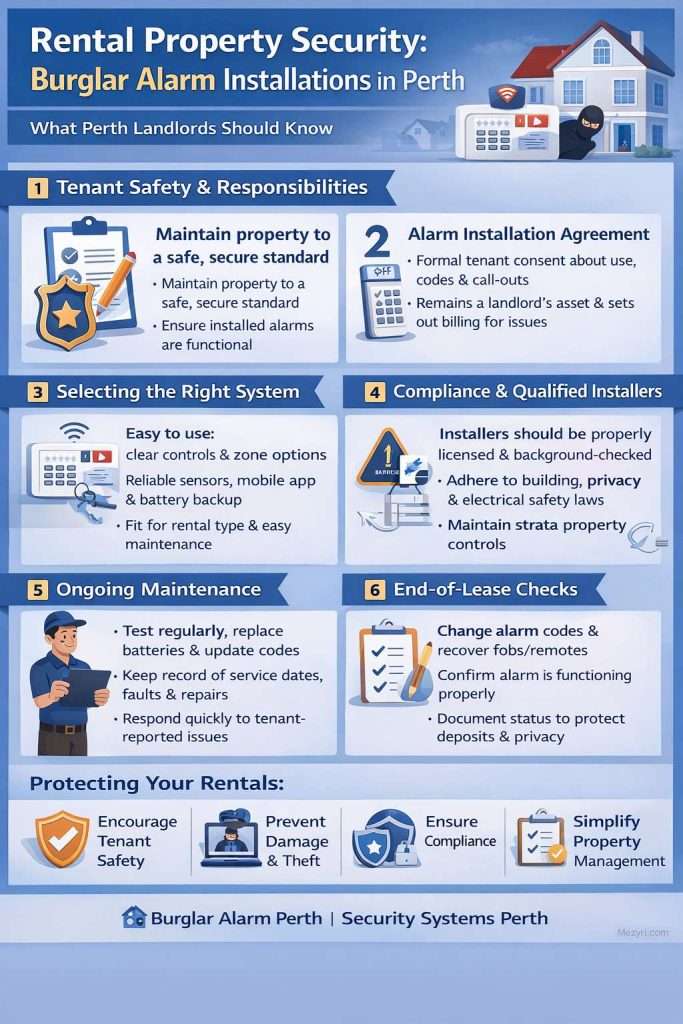
Maintenance, servicing & ongoing performance
Once installed, maintenance is what keeps an alarm from becoming a liability. A practical plan should include:
- Routine checks: periodic testing of sensors, siren, keypad/app connectivity, and battery status
- Battery replacement: schedule replacements rather than waiting for low-battery faults
- Firmware/app updates: keep devices updated where the system relies on software
- False alarm reduction: adjust sensor placement/sensitivity where pets, airflow, or curtains trigger motion sensors
- Service records: keep a log of service dates, faults, and rectifications for transparency
Property managers should also have a clear process for reporting faults and booking repairs, including what constitutes an urgent repair versus a standard maintenance item.
Managing codes, handovers & tenancy changes
Code control is often where disputes occur. The cleanest approach is a repeatable handover process:
- at lease commencement: issue tenant credentials, provide a basic user guide, and confirm responsibilities in writing
- during tenancy: document any changes (new occupants, lost fobs, repeated false alarms)
- at vacate: change master/user codes, recover fobs, verify operation, and reset app access
If we do not reset access properly between tenants, the system can create privacy and security risks.
What to do after an incident
If a break-in or attempted break-in occurs, we should:
- confirm tenant safety first and support police reporting
- secure the premises (locks, doors, windows) as a priority
- arrange inspection of the alarm system and entry points
- document damage, repairs, and any system faults or user issues
- review whether sensor coverage, lighting, and entry hardening should be updated
This is also the time to confirm the maintenance schedule and ensure the system remains fit for purpose.
Summary
Alarm installations can be a practical upgrade for rental properties when we treat them as part of the property’s ongoing safety and maintenance framework. Clear tenancy agreements, qualified installation, privacy-aware setup, and a consistent servicing plan reduce risk and improve tenant outcomes. If we standardise our approach and document responsibilities clearly, Burglar Alarm Perth installations become easier to manage across lease cycles, and Security systems Perth become a measurable part of our rental property risk controls.