
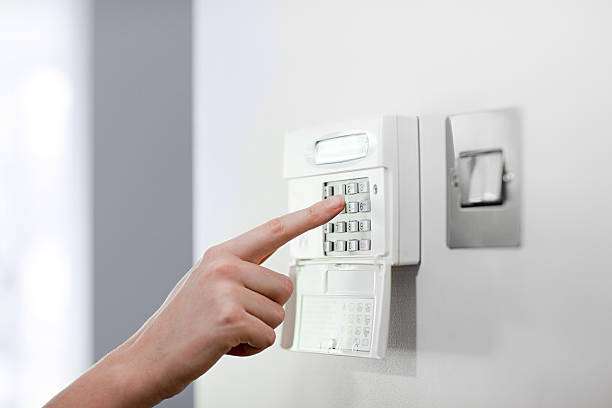
Alarm systems are only as effective as the action that follows an activation. In Perth homes, commercial sites, warehouses, & strata-managed buildings, 24/7 monitoring turns an alarm event into a defined response pathway rather than a missed notification. This is where Burglar Alarms Perth solutions typically separate into two categories: unmonitored self-notifying systems & professionally monitored services that coordinate verification, escalation, & reporting.
Monitoring only works if the equipment behind it does, which is why we pair it with ongoing alarm service and maintenance.
Monitoring is not “extra noise”; it is the operating layer that decides who is contacted, in what order, with what information, & how outcomes are documented. For risk management, after-hours coverage, staff safety, & insurer scrutiny, that operating layer often becomes the deciding factor in whether an alarm installation delivers practical value.
Monitored vs Unmonitored Alarms: What Actually Changes
Unmonitored (self-notifying) alarms
An unmonitored alarm usually sends alerts to a phone app, triggers an on-site siren, or activates local devices such as lights. The key limitation is straightforward: the system depends on someone being available, awake, connected, & willing to act. In practice, Perth alarm activations can occur during travel, overnight, during meetings, in low-signal areas, or when the nominated contact details are out of date.
Common outcomes with unmonitored setups include:
- Alerts that are not seen promptly (battery saving modes, muted notifications, phone off)
- Uncertainty about whether the event is genuine (no verification pathway)
- Delays while the owner decides what to do
- Higher personal risk if an owner attends site alone
- Limited event documentation beyond app logs
Unmonitored solutions can still suit low-risk premises or budgets, but they place the responsibility for decision-making & escalation on the end user.
Monitored 24/7 alarms
A monitored service routes alarm signals to a staffed monitoring centre that operates 24/7. When an event occurs, the centre follows predefined instructions to verify the activation where possible & escalate to nominated contacts, mobile patrols, or emergency services according to the agreed response plan.
The operational difference is consistency:
- Signals are received & handled even if the owner is unavailable
- Response steps are standardised rather than improvised
- Outcomes are recorded in a formal incident trail
- Escalation can be matched to the specific risk profile of the premises
For many Perth organisations, monitored solutions are part of broader Security Systems Perth risk controls because the same response logic can be applied across intrusion, duress, access control, & integrated CCTV events.
What “24/7 Monitoring” Typically Includes
A quality monitoring service usually provides:
- Continuous receipt of alarm signals (intrusion, tamper, communication faults, power loss)
- Operator-led processing using an agreed alarm response procedure
- Contact sequencing (site keyholders, duty managers, building managers, strata contacts)
- Optional verification inputs (dual-path signalling, zone information, user codes, video verification where supported)
- Escalation to a nominated response provider (mobile patrol) or emergency services where appropriate
- Incident reporting, call logs, & event history that can be used for internal audits or insurer queries
The service is designed to reduce uncertainty. Instead of “an alarm went off”, the aim is “an alarm event was received, processed, escalated, & closed with a recorded outcome”.
Response Pathways: How an Alarm Event Is Handled
While each site should have a customised response plan, most monitoring pathways follow a structured sequence.
1) Signal reception & categorisation
The monitoring centre receives the signal & identifies the event type: intrusion zone, entry/exit delay failure, panic/duress, tamper, power fault, or communication fault. Categorisation matters because response speed & escalation differ by event type.
2) Verification where possible
Verification reduces unnecessary call-outs & improves decision quality. Depending on the setup, verification may include:
- Confirming user codes & time windows (e.g., disarm attempts, authorised access times)
- Reviewing zone patterns (single zone vs multi-zone activation)
- Using audio or video verification if the system supports it
- Confirming site status via authorised contacts when safe to do so
Not every event can be verified, but a verification step can reduce false dispatches & improve confidence in escalation.
3) Escalation to keyholders or response providers
The centre follows the pre-agreed call list. This typically includes:
- Primary keyholders (owners, managers, duty staff)
- Secondary & tertiary contacts (backups if the primary does not answer)
- Mobile patrol dispatch if contracted
- Escalation rules if there is no response (for example, dispatch after a defined number of unanswered calls)
For commercial sites, it is common to define different instructions for different time windows (business hours vs after-hours) & for different zones (front entry vs restricted areas).
4) Emergency services involvement (where applicable)
Monitoring centres do not automatically dispatch police for every alarm. Escalation to emergency services generally depends on the alarm type, verification steps, local protocols, & the response plan agreed by the client. Duress/panic events may follow a different pathway to standard intrusion alarms.
5) Reporting & closure
A monitored event is typically closed with an operator log that records time stamps, actions taken, outcomes, & any follow-up required. This reporting layer is often overlooked, but it becomes valuable for:
- Security reviews (patterns by zone, time, user behaviour)
- Staff compliance checks (arming/disarming practices)
- Maintenance decisions (repeated faults, comms drop-outs)
- Insurer queries after an incident
Insurer Expectations: What Monitoring Can Influence
Insurers generally focus on risk controls that reduce likelihood of loss, reduce severity of loss, & improve evidence quality after an event. Monitoring can support these outcomes in several ways.
Documented incident trails
A monitoring centre’s logs can provide an independent timeline: alarm activation, verification actions, calls made, dispatch decisions, & outcomes. This can be useful when demonstrating that the system was operational & managed appropriately.
Reduced response time uncertainty
Insurers care about how long a premise may remain unsecured after an incident begins. Monitored response pathways reduce “unknown delay” caused by missed notifications or hesitation.
Evidence quality & system integrity
If monitoring includes signalling supervision (power loss, tamper, communication faults), it strengthens the position that the system is maintained & faults are acted upon. This matters because some claims disputes arise when a system was disabled, misconfigured, or not maintained.
Alignment with policy conditions
Some policies include security-related conditions (for example, requiring alarms to be set after hours, requiring certain security grades, or requiring monitored response for higher-risk categories). Monitoring does not replace reading policy wording, but it can help demonstrate compliance where conditions exist.
For Perth businesses with higher-value stock, tools, or equipment, insurers may also consider how monitoring integrates with access control, CCTV, & restricted area protection—particularly where theft risk is elevated.

Where Monitoring Delivers the Most Value in Perth
Monitoring is most beneficial where:
- The site is unattended for long periods (after-hours, weekends, remote depots)
- Multiple keyholders rotate (rosters, multiple managers, strata committees)
- Staff safety is a concern (duress buttons, late trading, cash handling)
- False alarms are costly (dispatch fees, operational disruption)
- There is a need for governance & reporting (compliance programs, audit trails)
- The premise has layered security (alarm + CCTV + access control) that benefits from coordinated escalation
In these contexts, monitoring transforms an alarm from a local alert into a managed security function that supports operational continuity.
Practical Checks Before Choosing a Monitoring Service
To keep monitoring effective over time, we typically look for:
- Up-to-date keyholder lists with backups & clear escalation rules
- Clear definitions for dispatch (when to call whom, when to dispatch patrol, when to escalate)
- Communication resilience (dual-path signalling where appropriate)
- Fault monitoring (power, battery, tamper, comms supervision)
- Reporting access (incident summaries, event history, service logs)
- Alignment with insurer requirements & site risk profile
A 24/7 service is only as reliable as the response plan behind it. The goal is not just to receive alarms, but to ensure each event has a predictable, documented outcome.
Closing Note
For many Perth property owners, the decision is less about whether an alarm can sound, & more about whether an alarm activation triggers a reliable chain of action. Monitored services provide that chain through structured escalation, formal reporting, & consistent after-hours handling—supporting both risk management & insurer expectations. When selecting Burglar Alarms or broader Security Systems Perth solutions, monitoring should be assessed as a core operational capability rather than an optional add-on.