
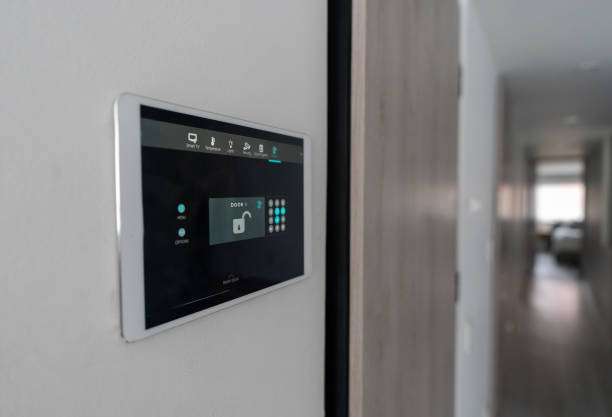
Across Perth’s residential, commercial and strata properties, many alarm systems installed 10–20 years ago are approaching end-of-life status. While they may still appear functional, outdated control panels, analogue communication modules and unsupported firmware present growing security and compliance risks. Understanding when to upgrade legacy systems is critical for maintaining reliable protection and aligning with modern standards.
If your panel is showing its age, our alarm service and maintenance team in Perth can tell you whether it is worth servicing or replacing before it fails.
This article outlines the warning signs of ageing alarm technology, the risks of unsupported hardware and the pathway to migrating towards hybrid or smart security platforms.
What Defines an End-of-Life Alarm System?
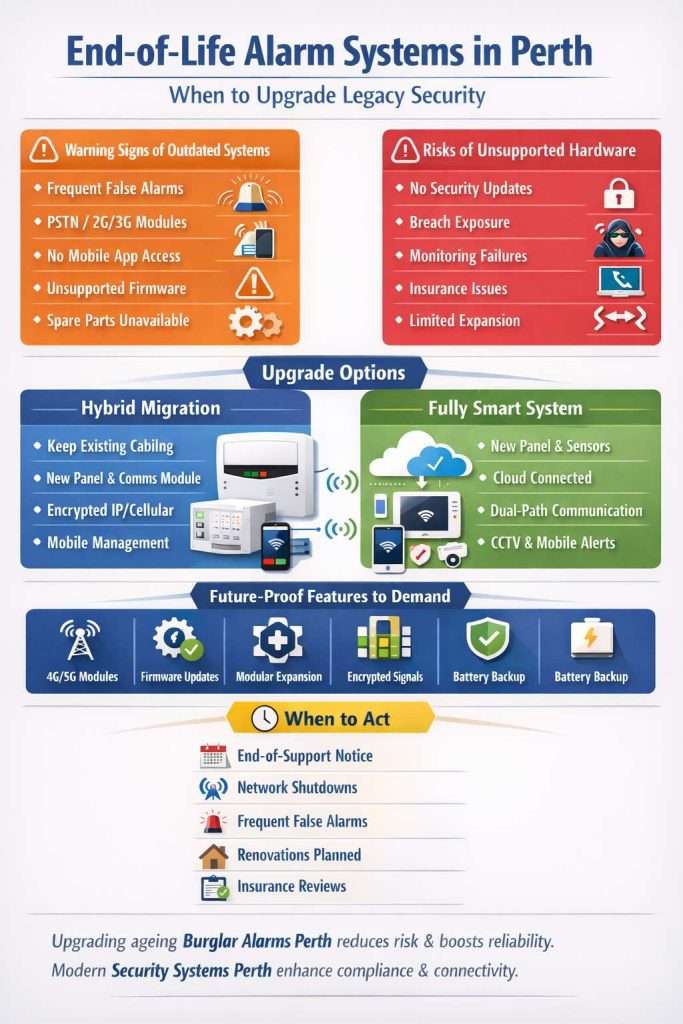
An alarm system reaches end-of-life when the manufacturer ceases production, firmware updates, technical support or spare parts supply. In many cases, older systems rely on:
- PSTN landline diallers
- 2G/3G communication modules
- Proprietary expansion boards no longer manufactured
- Non-encrypted signalling protocols
- Limited integration capability
Telecommunications infrastructure changes, including the progressive shutdown of older mobile networks, have accelerated obsolescence. Systems designed around legacy communication pathways may fail to transmit alarm signals reliably.
For property owners using older Burglar Alarms Perth installations, the absence of ongoing support can leave critical vulnerabilities unaddressed.
Warning Signs Your Alarm System Is Outdated
While not all ageing systems require immediate replacement, several indicators suggest upgrade planning is prudent:
1. Frequent False Alarms
Ageing PIR sensors, deteriorating wiring or outdated control boards often increase nuisance activations. False alarms reduce response confidence and may attract local authority penalties.
2. Inability to Integrate With Modern Devices
Legacy panels rarely support mobile app access, remote arming/disarming or integration with CCTV, access control or smart home platforms.
3. Communication Failures
If your alarm relies on analogue landlines or obsolete mobile modules, transmission reliability may already be compromised.
4. Lack of Encryption
Older systems often transmit signals without modern encryption standards, increasing interception risks.
5. Spare Parts Scarcity
If replacement components must be sourced from secondary markets, system longevity is uncertain.
When evaluating ageing security systems Perth properties commonly rely upon, communication infrastructure compatibility is one of the most significant risk factors.
Risks of Unsupported Hardware
Continuing to operate unsupported alarm hardware exposes property owners to several risks:
- Security Vulnerabilities: No firmware patches means emerging exploits remain unaddressed.
- Insurance Implications: Insurers may question coverage validity if systems are obsolete or non-compliant.
- Downtime Exposure: Component failure without available replacements may leave premises unprotected.
- Monitoring Interruptions: Monitoring centres may phase out compatibility with legacy signalling protocols.
Unsupported hardware also restricts scalability. As properties expand or operational needs change, legacy systems often lack available input/output capacity or expansion modules.
Migration Pathways: Hybrid vs Fully Smart Systems
Upgrading does not always require complete system replacement. A structured assessment allows property owners to determine whether partial migration is feasible.
Hybrid Upgrades
Hybrid systems combine existing wired infrastructure with new-generation control panels and communication modules. This approach is suitable where:
- Cabling remains compliant and structurally sound
- Field devices (sensors, reed switches) remain functional
- The objective is to modernise communication pathways
Benefits include reduced installation disruption and cost efficiency while enabling app-based management and encrypted signalling.
Fully Smart Systems
Full migration involves replacing the control panel, communication modules and often field devices. This is recommended when:
- Existing wiring is deteriorated
- Sensors exceed expected service life
- System architecture cannot support expansion
- Compliance requirements have changed
Smart systems offer:
- Cloud connectivity
- Real-time mobile notifications
- Encrypted IP & cellular dual-path communication
- Integration with CCTV, access control & intercom systems
- Analytics-driven event reporting
For many commercial premises, upgrading older security systems Perth enables consolidated management through unified platforms.
Compliance & Regulatory Considerations
Alarm upgrades should align with:
- Current Australian Standards
- Insurance policy requirements
- Local council alarm registration rules
- Telecommunications infrastructure changes
Monitoring providers increasingly require dual-path communication (IP & cellular redundancy). Systems dependent solely on outdated networks risk non-compliance with modern monitoring protocols.
Cost-Benefit Analysis of Delaying Upgrades
Property owners sometimes defer upgrades until failure occurs. However, reactive replacement often results in:
- Emergency call-out costs
- Temporary security gaps
- Limited equipment availability
- Reduced negotiation leverage
Proactive migration enables:
- Planned budgeting
- Competitive supplier evaluation
- Staged installation scheduling
- Integration with broader security upgrades
In many cases, upgrading Burglar Alarms Perth installations before failure reduces long-term expenditure and operational risk.
Future-Proofing Alarm Infrastructure
When upgrading, consider long-term scalability:
- Modular panel architecture
- Firmware update capability
- 4G/5G-compatible communication modules
- Open integration protocols
- Battery backup performance standards
Future-ready systems support evolving security needs without requiring full replacement within a short cycle.
When to Act
Upgrade planning should begin when:
- The manufacturer announces product end-of-support
- Communication modules approach network sunset deadlines
- False alarm frequency increases
- Insurance providers raise compliance concerns
- Expansion or renovation projects are scheduled
Waiting for catastrophic failure exposes properties to avoidable security exposure.
Conclusion
Legacy alarm systems across Perth properties are steadily reaching end-of-life due to technological, telecommunications and compliance shifts. Unsupported hardware, obsolete communication pathways and limited integration capability create measurable risk.
A structured audit of existing infrastructure allows property owners to determine whether hybrid migration or full system replacement is appropriate. Proactive upgrades enhance reliability, regulatory alignment and operational resilience while reducing long-term costs.
Modernising ageing security infrastructure is not simply a technology refresh; it is a risk management decision that safeguards property, occupants and business continuity.