
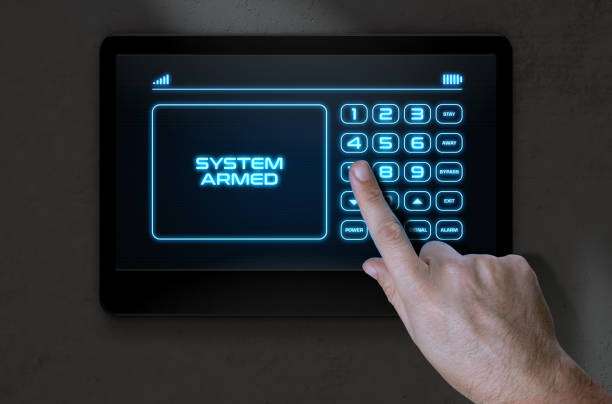
Security is a fundamental operational requirement for commercial properties. Businesses manage valuable stock, sensitive information, specialised equipment, and staff safety obligations, all of which require reliable protection. Across Perth’s commercial landscape, retail stores, warehouses, offices, and industrial facilities face varying intrusion risks that require carefully configured alarm systems.
A professionally designed Burglar Alarm Perth solution provides structured detection, rapid alert capabilities, and integration with broader security infrastructure. When combined with modern security systems Perth, commercial properties gain layered protection that supports both operational continuity and regulatory compliance.
Understanding how alarm configurations vary between commercial sectors is essential for selecting the correct security framework.
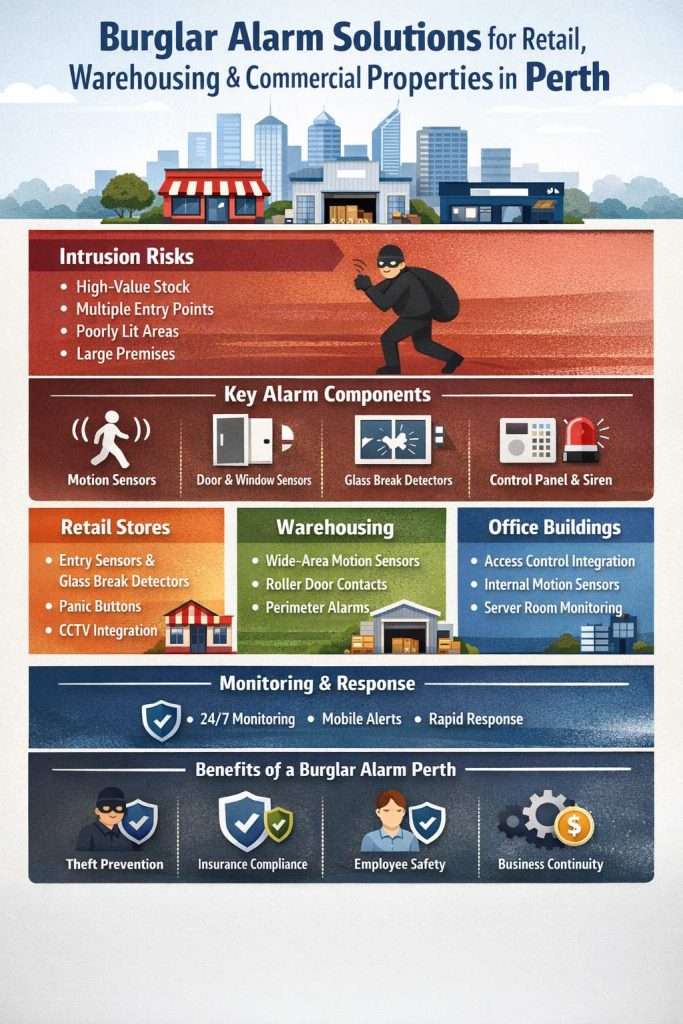
Intrusion Risks Facing Commercial Properties
Commercial premises present attractive targets for opportunistic and organised criminal activity. Intrusions typically occur during non-operational hours when buildings are unoccupied and security visibility is reduced.
Common risk factors include:
• High-value stock stored overnight
• Limited street visibility or poorly lit access points
• Multiple entry doors and service entrances
• Loading docks and rear access areas
• Large floor spaces with limited supervision
• Shared commercial complexes with multiple tenants
Retail outlets frequently experience smash-and-grab theft or forced entry through rear service doors. Warehousing facilities face risks associated with inventory theft, particularly where valuable stock is stored in bulk quantities. Offices and professional premises may be targeted for electronic equipment or confidential information.
A properly structured Burglar Alarm Perth installation mitigates these risks by creating monitored zones that detect unauthorised movement, entry attempts, or perimeter breaches.
Alarm System Components in Commercial Environments
Commercial alarm systems are typically designed as multi-layered detection networks rather than single-device solutions. These systems incorporate several technologies working together to detect and report intrusion events.
Core components usually include:
Door and Window Contact Sensors
Magnetic sensors monitor entry points such as doors, roller shutters, and windows. When an access point is opened without authorisation, the system triggers an alarm signal.
Motion Detection Sensors
Passive infrared (PIR) or dual-technology sensors detect movement within designated areas. These are commonly installed in corridors, shop floors, offices, and warehouse aisles.
Glass Break Detectors
Retail premises often install glass break sensors near display windows or storefront glass panels to detect forced entry through glazing.
Control Panels
The control panel acts as the central management system, coordinating sensors, alarms, and communication pathways.
Audible and Visual Alarms
Sirens and strobe lights provide an immediate deterrent while notifying nearby occupants or security personnel.
Monitoring Connectivity
Modern commercial alarms connect to monitoring centres via cellular, IP, or dual-path communication, enabling rapid response if an intrusion occurs.
Integrated security systems Perth environments may combine alarm infrastructure with surveillance cameras, access control, and remote monitoring platforms.
Security Requirements for Retail Premises
Retail environments typically contain high-value merchandise in publicly accessible spaces. The layout often includes large display windows, multiple access points, and frequent customer movement during trading hours.
Retail alarm systems therefore require carefully configured operational modes that allow daytime access while protecting the premises after closing.
Key retail security measures include:
• Entry sensors on all customer and service doors
• Glass break detectors for storefront windows
• Motion sensors covering display floors
• Panic buttons for staff emergency situations
• After-hours alarm arming schedules
Integration with CCTV surveillance further strengthens retail security by providing visual verification when an alarm is triggered.
Retail businesses often rely on scalable security systems Perth solutions that support future store expansion, additional monitoring zones, or integration with point-of-sale security monitoring.
Alarm Configurations for Warehousing Facilities
Warehouses present a very different security challenge compared with retail stores. Large storage areas, tall shelving systems, and multiple loading docks require broader coverage and specialised sensor placement.
Warehousing security solutions typically include:
• Wide-area motion sensors for large floor spaces
• Beam detectors across loading dock entrances
• Roller door contact sensors
• Perimeter detection systems for external fencing
• Zoning configurations separating storage areas
Warehouses storing high-value inventory often implement layered alarm zones so security teams can identify precisely where a breach occurs.
For example, external perimeter detection may trigger an initial alert, followed by interior motion detection if the intruder enters the building. This layered approach improves response accuracy while reducing false alarms.
Security Strategies for Offices & Commercial Buildings
Professional offices and commercial buildings face different security considerations compared with retail or warehousing environments. Sensitive documents, digital infrastructure, and employee safety are often the primary concerns.
Office alarm systems commonly include:
• Motion sensors in corridors and shared areas
• Entry monitoring for main reception doors
• Alarm zoning for restricted departments
• Access control integration for authorised staff entry
• Monitoring for server rooms or equipment storage areas
When integrated with broader security systems Perth platforms, alarm systems can work alongside electronic access control to monitor who enters and exits specific areas within the building.
This combination of intrusion detection and access tracking creates a structured security environment suited to modern commercial operations.
Monitoring & Response Systems
Alarm monitoring plays a critical role in commercial security effectiveness. When a breach is detected, alarm signals can be transmitted to security monitoring centres or designated response teams.
Monitoring systems may include:
• 24-hour alarm monitoring services
• SMS or app-based alerts for business owners
• Integration with security patrol providers
• Direct notifications to law enforcement when necessary
Modern monitoring platforms allow property managers to view alarm activity, arm or disarm systems remotely, and manage multiple premises through a single interface.
These technologies are particularly valuable for businesses operating multiple retail outlets or distributed warehouse facilities.
Compliance & Insurance Considerations
Many commercial insurance providers require approved alarm systems as part of property protection policies. Security infrastructure can influence insurance eligibility, coverage levels, and premium costs.
Proper alarm installation and maintenance support compliance with insurer requirements while also demonstrating due diligence in protecting assets.
Businesses operating specialised environments, such as pharmaceutical storage or high-value electronics distribution, often require certified alarm systems to meet industry security standards.
Professional installation ensures that equipment placement, wiring, and system configuration meet these requirements.
Designing an Effective Commercial Alarm System
An effective commercial alarm system is not a one-size-fits-all solution. Security requirements vary depending on the property layout, operational hours, risk exposure, and business activities conducted on the premises.
Professional assessment typically evaluates:
• Building access points
• Internal layout and visibility
• Inventory storage locations
• Operational schedules
• Environmental conditions affecting sensors
From this assessment, technicians design alarm zones and detection coverage tailored to the property’s security profile.
A well-designed Burglar Alarm Perth installation ensures that intrusion attempts are detected quickly, while integrated security systems Perth infrastructure provides comprehensive oversight of commercial environments.
Strengthening Commercial Property Protection
Retail stores, warehouses, and office buildings each face unique security challenges that require structured alarm system design. Intrusion detection technology, combined with monitoring services and integrated security platforms, forms the foundation of modern commercial protection strategies.
Businesses across Perth continue to adopt alarm systems that align with operational requirements, asset protection goals, and evolving security risks. With carefully configured alarm zones and reliable monitoring infrastructure, commercial properties can maintain secure environments that support business continuity and safeguard valuable assets.