
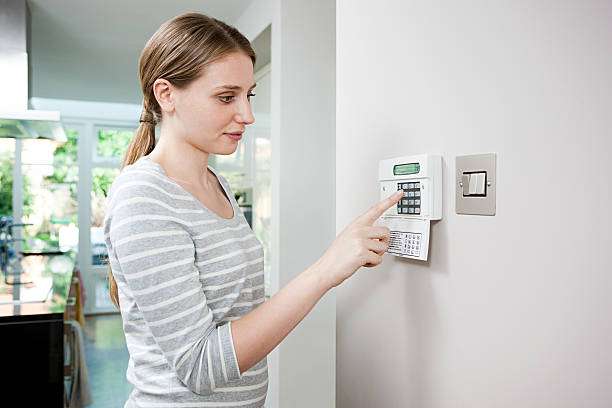
Home insurers price risk. In practice, that means they look at how likely a claim is to occur (frequency) and how large that claim might be (severity). For Perth homeowners, burglary-related claims can sit within broader home & contents risk models, alongside factors such as location, construction type, past claims history, occupancy patterns, and how well the property is protected.
The practical opportunity is simple: when we can evidence stronger security controls, some insurers may treat the home as a lower risk profile, which can improve terms, reduce excesses, or contribute to premium reductions depending on the insurer’s underwriting approach. Where the insurer’s rating rules allow for it, alarm-related risk controls are usually assessed on type of system, installation quality, and proof the system is active and maintained.
How insurers typically assess “security risk” in home policies
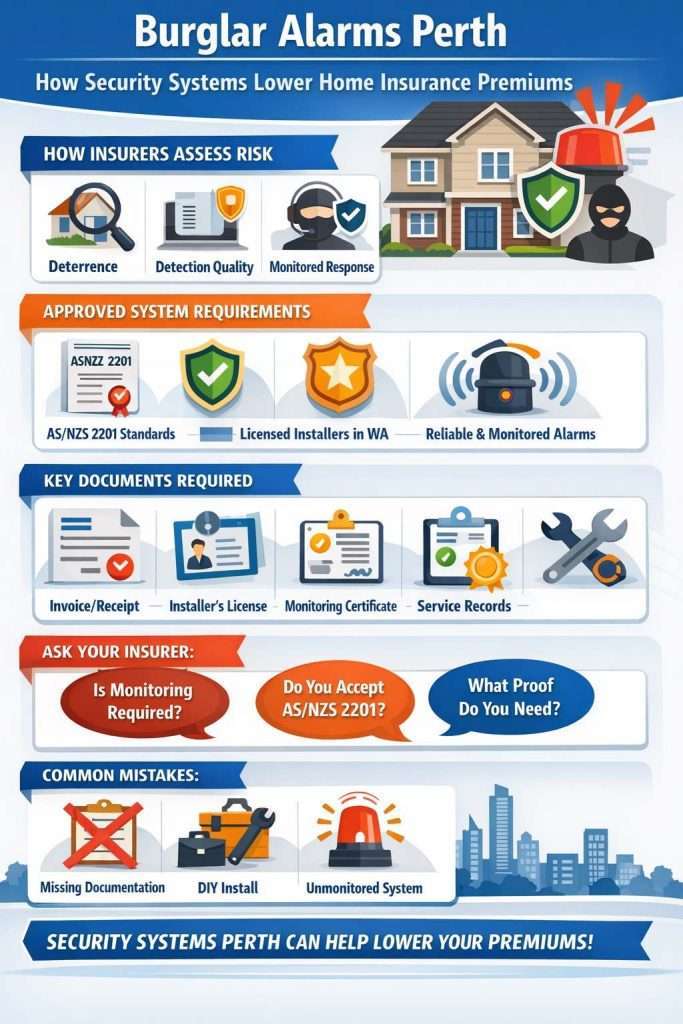
Insurers tend to focus on controls that either deter unauthorised entry or increase the likelihood of a fast response. In underwriting terms, they consider:
- Deterrence: visible sirens, signage, and obvious perimeter protection that reduces the chance of an attempted break-in.
- Detection quality: sensor coverage (doors, windows, internal motion), tamper protection, backup power, and how reliably the system triggers.
- Notification & response: whether the event is just a local siren/phone alert, or a monitored service that escalates to a response workflow.
- Proof & auditability: documentation that confirms what is installed, who installed it, and whether it is monitored/maintained.
A key distinction is monitored vs unmonitored. Some insurers explicitly state that only certain alarm types (for example, monitored “back-to-base” arrangements) may be considered when calculating premiums.
What “approved” or “recognised” systems usually mean
Insurers rarely publish a single universal “approved list” that applies across the market. Instead, they often look for signals of quality and compliance, such as:
- Standards-aligned design & installation
In Australia, intruder alarm design, installation, commissioning, and maintenance are commonly referenced against the AS/NZS 2201 series. The AS/NZS 2201.1 standard, for example, specifies minimum requirements for intruder alarm systems at a client’s premises (including installation and maintenance expectations).
In practical terms, aligning to standards helps demonstrate the system is not a DIY, “best-effort” setup. - Licensed security installers in WA
For Perth and broader WA, insurers may be more comfortable when installation is completed by properly licensed parties, because licensing supports competency, accountability, and traceability. WA Police outlines security licence application requirements, and business guidance resources also summarise the need for appropriate licensing for security installation activities. - System features that reduce loss
Typical features that can strengthen an insurance conversation include: perimeter detection (door/window), internal motion with sensible zoning, tamper detection, battery backup, secure communications, and (where relevant) monitored escalation.
If we position the system as a risk control, the goal is to show the insurer that the alarm is reliable, professionally installed, and actively used—not merely present.
Monitoring, response pathways & why they matter to insurers
From an insurance point of view, monitoring can reduce the “time-to-intervention”, which can reduce both theft losses and secondary damage. Some insurers draw a firm line here—recognising monitored alarm types while treating cameras or unmonitored devices as neutral on pricing.
That doesn’t mean an unmonitored system has no value; it often improves deterrence and supports claims evidence. It simply means that, when premium reductions are on the table, monitoring is more likely to be the feature the insurer can confidently “price in”.
Documentation requirements insurers commonly ask for
To have security recognised in underwriting (or at renewal), insurers usually need clear, easy-to-verify proof. A strong documentation pack typically includes:
- Itemised invoice/receipt
Showing the system type, key components (control panel, keypad, sensors, siren), and installation address. - Installer details
Business name, ABN, and confirmation the installer is appropriately licensed for WA security installation activities (where applicable). WA licensing guidance helps clarify what “properly licensed” means in this context. - System description summary (one page)
A simple statement of what’s installed: perimeter points protected, internal detection, tamper protection, battery backup, and communications method. - Monitoring certificate (if monitored)
Many monitoring providers can supply a certificate or letter confirming active monitoring at the insured address, which can support insurance discount assessment. (This is commonly referred to as an “alarm monitoring certificate”.) - Maintenance/servicing record (where available)
Insurers may not always request it, but it strengthens the risk narrative—especially for monitored alarms or higher-value homes.
A practical tip: keep these documents together and send them with the same email thread when requesting reassessment. Underwriters move faster when evidence is complete.
What to ask your insurer so the alarm is correctly recognised
When speaking with a broker or insurer, we typically recommend asking questions that map directly to underwriting fields:
- “Do you apply a premium adjustment for professionally installed intruder alarms, and does it need to be monitored?”
- “If monitored, what evidence do you require—invoice, monitoring certificate, installer details?”
- “Do you recognise standards-aligned installations (e.g., AS/NZS 2201) or licensed installer confirmation?”
- “Does the discount apply to building, contents, or both—and is it conditional on ongoing monitoring?”
This approach avoids assumptions and ensures the policy is rated using the insurer’s current rules.
Common reasons discounts don’t get applied
Even when a home has strong security, premium benefits can be missed due to avoidable issues:
- The insurer wasn’t told at inception/renewal (security details never captured in rating).
- Documentation is incomplete (no invoice, no monitoring proof, no installer details).
- The system is treated as “unmonitored” when the insurer only recognises monitored services.
- DIY installs with no compliance trail, making it hard for underwriting to rely on the control.
Turning security into an insurance-strength asset
Where insurers recognise alarms, the best outcomes usually come from treating the alarm as a documented risk control rather than a gadget purchase. That means:
- choosing a fit-for-purpose system aligned to recognised installation expectations (AS/NZS 2201 is the common reference point)
- using appropriately licensed security installers in WA
- keeping clear documentation for underwriting review
- confirming with the insurer whether monitoring is required for pricing recognition
When we put those pieces together, Burglar Alarms Perth becomes more than a security upgrade—it becomes part of a credible risk profile that insurers can assess. The same applies when insurers evaluate integrated security systems Perth solutions that combine intrusion detection with clear, auditable proof of installation and operation.
If we want the insurer to act on security improvements, the rule is straightforward: make the risk control easy to verify, easy to trust, and easy to rate—then request the reassessment at renewal or mid-term if your insurer allows it.