
Retail theft in Perth has reached unprecedented levels, putting significant pressure on shopping centres to adapt. With loss prevention now a critical operational focus, centres are moving beyond traditional security models. The evolution of security systems—driven by the rise in organised retail crime, aggressive shoplifting, and repeat offenders—is centred on technology. Tools such as facial recognition, AI video analytics, RFID tracking, and ANPR systems are reshaping how retail environments protect assets and staff.
This article outlines the current theft landscape and explores how shopping centres are using smart, data-driven systems to stay ahead of the threat.
Surge in Retail Crime: A Growing Operational Risk
Retail theft has grown both in volume and complexity. Shopping centres are not just dealing with occasional shoplifting, but also more coordinated and high-value theft incidents. Factors contributing to this rise include:
- Increased economic stress driving more opportunistic theft
- Understaffing and expansion of self-service areas reducing deterrence
- Growth of organised retail crime groups targeting multiple locations
These issues result in higher shrinkage rates, safety concerns for staff, and greater insurance risk exposure—pushing centre management to invest in smarter, integrated security solutions.
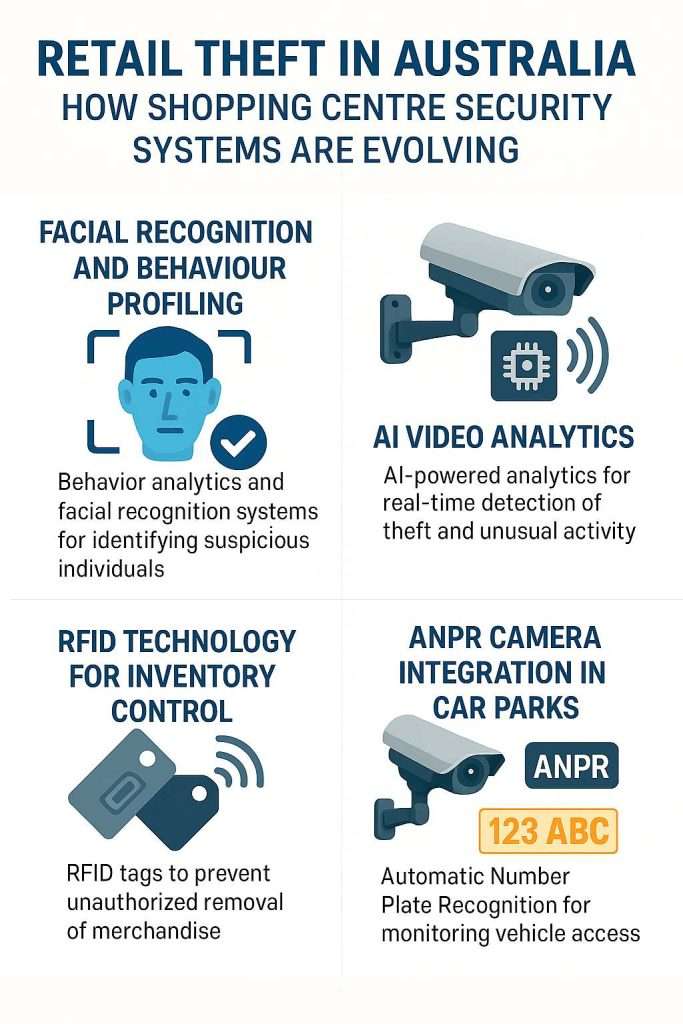
Facial Recognition and Behaviour Profiling
While full-scale facial recognition remains subject to regulation, shopping centres are leveraging advanced behaviour analytics. These systems monitor patterns such as loitering, concealment, or repeated visits to high-risk zones. When specific actions match predefined threat profiles, alerts are sent in real time to security teams.
This shift from passive video surveillance to proactive behaviour detection improves incident prevention, especially in high-traffic or vulnerable retail areas.
AI Video Analytics in Real-Time Surveillance
AI-powered video analytics is now standard in modern retail security strategies. These systems analyse CCTV footage in real time, identifying anomalies and issuing instant alerts for suspicious activity.
Shopping centres benefit from:
- Reduced reliance on manual monitoring
- Faster identification of high-risk incidents
- Better use of resources by filtering key events from irrelevant footage
AI analytics can also integrate with other systems to generate comprehensive security reports across multiple tenants and locations.
RFID Technology for Inventory Control
Retailers within shopping centres are increasingly adopting RFID tagging to track inventory in real time. This helps to reduce internal theft, unauthorised removal, and inaccurate stock counts. For centre management, it also enhances supply chain transparency and provides early warning signs of stock irregularities.
RFID tagging is especially valuable for high-shrink items such as clothing, cosmetics, electronics, and alcohol. When integrated with AI analytics, RFID enables end-to-end loss prevention.
ANPR Camera Integration in Car Parks
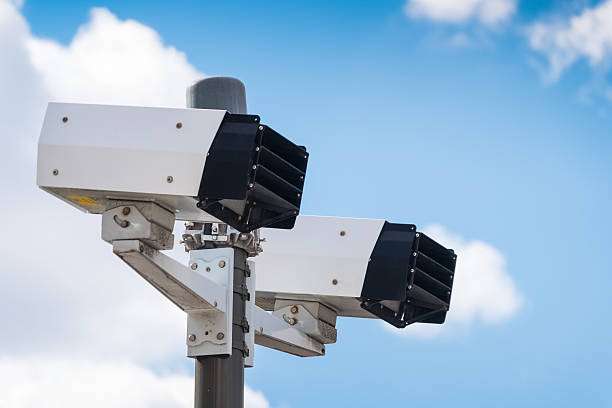
Shopping centre car parks are frequent exit routes for stolen goods. To strengthen perimeter control, many sites are now using ANPR camera installation Perth providers to deploy automatic number plate recognition systems.
These systems:
- Log all vehicle entries and exits
- Flag suspicious or repeat vehicles
- Support investigations by linking plate data to internal incidents
Using an ANPR camera Perth service allows centres to monitor access points efficiently and coordinate vehicle-based alerts with in-store events.
Integrated Security Models for Complex Environments
Shopping centres require multi-layered security that integrates people, processes, and platforms. Leading centres now combine:
- CCTV with real-time AI analytics
- RFID-based item tracking
- Behaviour recognition at entrances and exits
- ANPR for car park monitoring
- Centralised dashboards for reporting and alerts
This integrated approach ensures faster response times, reduces losses, and builds a safer environment for tenants and customers alike.
Challenges and Considerations
Implementing advanced systems requires upfront investment and a commitment to compliance. Key considerations include:
- Privacy legislation around video and behavioural analytics
- Staff training to ensure technology is used effectively
- Integration with existing infrastructure
- Data governance and cybersecurity for connected systems
Despite these challenges, the long-term benefits in risk mitigation and operational efficiency outweigh the initial complexity.
The national picture behind the Perth numbers
Retail shrink across Australia has grown into a board level risk, with losses measured in the billions and a clear upward trend in police recorded shop theft. Incidents concentrate around high velocity categories such as FMCG, beauty, apparel and small electronics, and around self checkout. Organised retail crime, repeat offenders and aggression towards staff are the material drivers, and Perth centres are seeing the same pattern play out locally.
Retail crime intelligence platforms
Shared platforms connect incident reports, body worn camera footage, vehicle plates and repeat offender data. Centres and tenants coordinate interventions, escalate to police faster, and track outcomes using consistent incident IDs. In a multi tenant centre this is often the difference between an isolated report and a pattern that can actually be acted on.
Budget framing and ROI
Use your current shrink and incident data to set baselines by zone and by tenancy. Typical payback drivers include:
- Reduced self checkout loss through real time interventions
- Higher recovery rates from better footage and RFID reconciliation
- Lower guard overtime via event driven monitoring
- Fewer store disputes and claims thanks to clearer evidence
Measure what matters: shrink percentage, recovery value, incident to intervention time, staff safety reports and false alert rates. Without those baselines it is very hard to prove an upgrade paid for itself.
What to require from a security provider
For owners evaluating shopping centre security systems in Perth, we prioritise AI ready cameras, a secure cloud VMS, and item level data sharing frameworks that tenants can opt into under centre wide governance. When assessing CCTV providers in Perth, require proof of analytics accuracy in your actual lighting conditions, documented privacy controls, ANPR performance in your car parks, and references from comparable multi tenant environments.
Conclusion
As retail theft continues to evolve, so will the technologies used to combat it. The future points to deeper integration of data analytics, cloud-based surveillance, and AI-powered response mechanisms. Shopping centres that adopt these innovations will be better placed to protect assets, support tenants, and maintain public trust.