
Updated 26/10/2026
For most Perth homes, wired PoE cameras are the more reliable choice: one cable carries both power and video, so there are no batteries to charge and no Wi-Fi signal to drop out. Rest-A-Sured Security, a WA owned security company based in Wangara, usually installs cabled (PoE) cameras rated IP66 or better for that reason. Wireless cameras still have a place, mainly where running a cable is not practical.
This guide explains the difference, where each type makes sense on a typical Perth property, and what to ask before you choose.
What is a wired PoE security camera?
PoE stands for Power over Ethernet. Each camera connects to the recorder with a single network cable, and that cable carries both the power the camera needs and the video it records. The recorder sits inside the home, usually in a cupboard or the garage, and stores the footage.
Because every camera is cabled back to the recorder, the system does not depend on your home Wi-Fi to record. If the internet drops out, the cameras keep recording to the recorder. You only lose remote viewing on your phone until the connection comes back.
What is a wireless security camera?
“Wireless” usually means the camera sends its video over Wi-Fi instead of a network cable. It does not always mean there are no cables at all. Many wireless cameras still need a power point nearby, and the ones that run on batteries need charging or replacing.
Battery cameras usually sleep until they detect motion, then wake up and start recording. That saves power, but it can mean the first second or two of an event is missed, and they do not record around the clock.
Wired or wireless: the main differences
Reliability
A cable does not drop out. Wi-Fi can, especially at the far end of a block, through double brick walls or out by a gate or shed. If a camera loses its Wi-Fi connection at the wrong moment, the footage you need may not be there.
Power
PoE cameras are powered through the same cable as the video, so they run all the time without anyone remembering to charge them. Battery cameras need regular charging, and a flat battery means no recording.
Recording
PoE cameras record to a recorder in the home, and the recording can be set to run continuously or only on motion. How long footage is kept depends on the number of cameras, the resolution, the frame rate, how busy the scene is and whether recording is continuous or motion only, so there is no single standard figure. Many wireless cameras store clips in an app instead, which can involve a subscription.
Weather
Perth summers are hot and the coast brings salt air, so outdoor cameras need to be built for it. An IP66 rating means a camera is dust tight and protected against powerful jets of water. That is the minimum Rest-A-Sured usually fits outdoors.
Installation
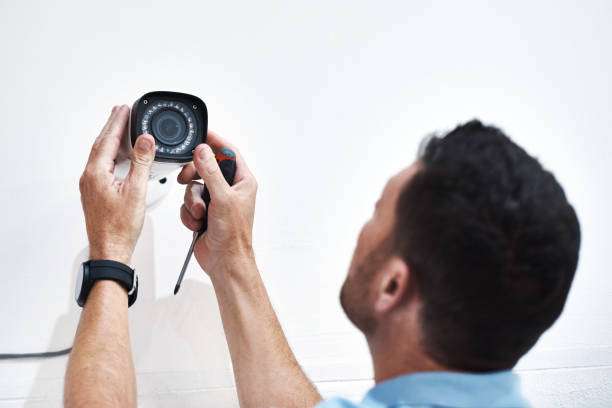
Wired cameras take more work to install because the cable has to be run from each camera back to the recorder. A single storey home with roof space is usually straightforward. Double brick walls, two storey homes and long runs out to a gate take longer. Wireless cameras are quicker to put up, which is why they are popular as a DIY option.
Where each type makes sense on a Perth property
- Front door, driveway and side access: wired PoE. These are the cameras you most need to work every time, and they are usually close to the roof space for cabling.
- Back yard and rear entry: wired PoE where a cable can be run, so the cameras covering the most common entry points never depend on Wi-Fi.
- A shed, granny flat or gate a long way from the house: this is where running a cable can be hard, so it is worth talking through the options at the site visit.
- Renters or a short-term need: a wireless camera may be the practical choice where cabling is not allowed.
What to ask before choosing a security camera system
- Will the cameras keep recording if the internet goes down?
- Where is the footage stored, and roughly how many days will it keep with the cameras and settings you want?
- What weather rating are the outdoor cameras?
- Can you view live and recorded footage on your phone?
- Can the system be linked to your alarm, so an alarm event and the footage can be checked together?
- What warranty comes with the installation, and is the installer licensed?
How Rest-A-Sured installs home CCTV in Perth
Every job starts with a site assessment. We walk the property to find the entry points and blind spots, then recommend camera types and positions that suit how the home is used, not a one size fits all package. We usually fit cabled (PoE) cameras rated IP66 or better, and most systems we install support viewing from your phone. At handover we show you how to use the system, including remote viewing, playback and exporting a clip. Installations come with a 2 year warranty. More on what is included on our CCTV installation in Perth page.
Rest-A-Sured has been in the security industry since 1998 and holds WA security licence 09458. If you would like the cameras tied into 24/7 alarm monitoring, we are affiliated with one of the largest independently owned grade 1 monitoring stations in WA.
Wired vs wireless security camera questions
Do wired security cameras work without the internet?
Yes. Wired PoE cameras record to the recorder in your home, so they keep recording if the internet drops out. You lose remote viewing on your phone until the connection is back.
Are wireless security cameras really wireless?
Not always. Many send video over Wi-Fi but still plug into a power point. Battery models have no cables but need charging.
What does PoE mean on a security camera?
Power over Ethernet: one network cable carries both power to the camera and video back to the recorder.
What camera rating is best for outdoors in Perth?
Look for IP66 or better, which means dust tight and protected against strong jets of water. Rest-A-Sured usually fits outdoor cameras rated IP66 or better.
How do I get a quote?
Call us on 08 9309 9500 or send us your details, and we will arrange a site assessment and a free quote.